
Fix the Wall Before You Paint It
Fresh paint over a bad wall is still a bad wall, and gloss makes every flaw more obvious. We repair cracks, holes, popped screws, water damage, and failed tape, then blend the texture so the repair disappears under the finish coat instead of announcing itself.
What Our Drywall Work Covers
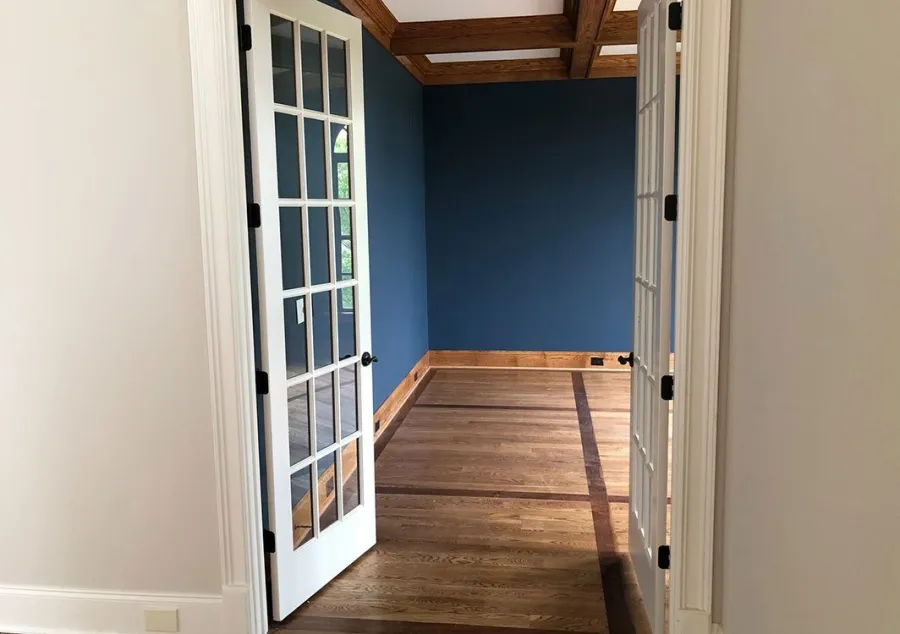
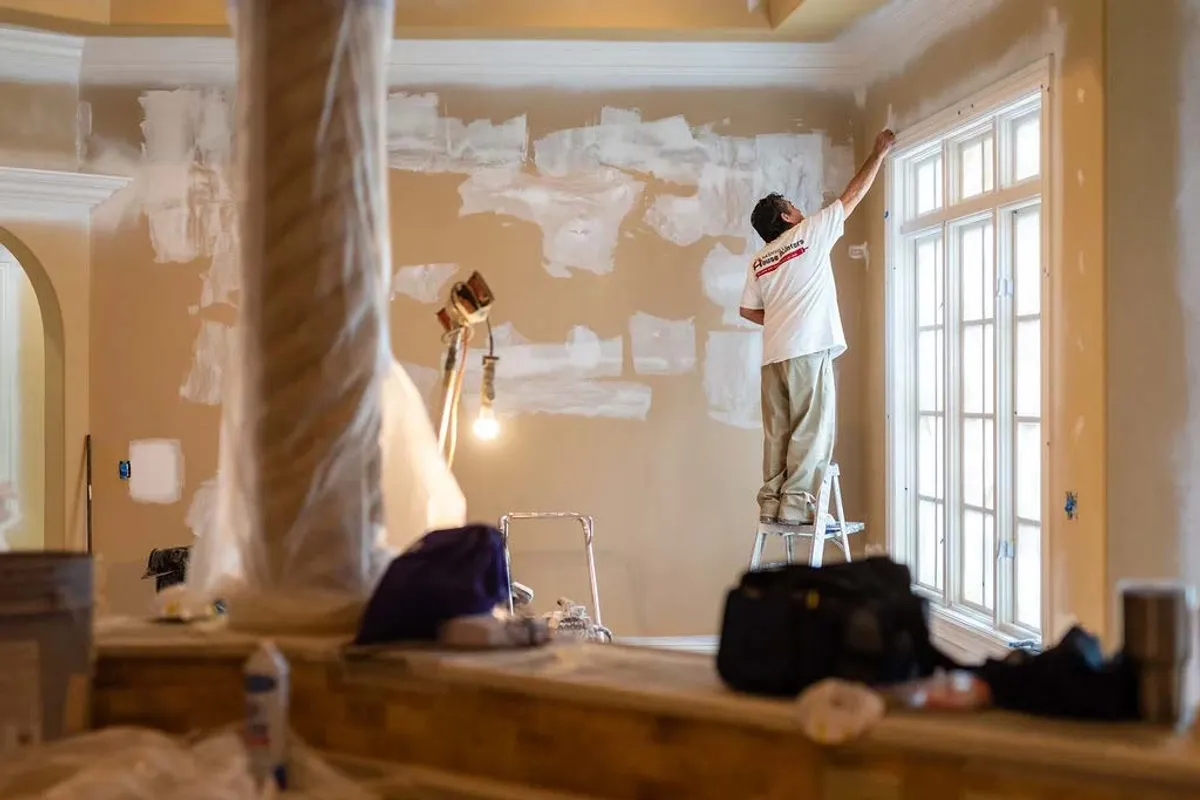
Ceiling Repair in Nashville
Ceilings are less forgiving than walls. Light comes across them at a low angle for most of the day, and that raking light picks out every ridge, every under-filled seam and every patch that was feathered too narrow. A repair that would be invisible on a wall can be obvious on a ceiling six feet away.
Most of what we see in Middle Tennessee homes falls into three groups. Cracks that run along a seam, usually from the house settling or from seasonal movement in the framing. Screws and nails backing out in a line, which is the framing drying and shrinking around the fastener. And stains, which are a water problem wearing a drywall costume.
Textured ceilings add a step. Knockdown and orange peel can be matched closely. A heavy hand-applied texture is harder, and we would rather tell you up front how close we expect to get than surprise you afterwards.
Water Damaged Drywall
The first question is always where the water came from, and the honest answer is that we will not patch a wall while it is still getting wet. A roof leak, a supply line, a shower pan, a gutter dumping against the siding: whatever it is has to be fixed and the cavity has to dry before any compound goes on. Skip that and the repair fails, usually within a season.
Once it is dry, the board tells you what it needs. Drywall that is soft, crumbling or sagging has lost its integrity and gets cut out and replaced. Board that is stained but still firm can often stay, sealed and refinished. Press it. If your thumb sinks in, it is coming out.
Water stains also bleed. They will ghost straight back through two coats of ordinary wall paint within days, because the tannins and minerals in the stain are soluble in a water-based finish. The fix is a stain-blocking primer over the affected area before anything else goes on, and that step is not optional no matter how good the topcoat is.
One limit worth stating plainly: if there is active mold growth behind the board rather than surface staining, that is remediation work and it belongs with a specialist. We will tell you if that is what we are looking at rather than closing the wall up over it.
Texture Matching Is the Whole Job
Filling a hole is the easy part. Making the repair disappear is the part that separates a drywall job you notice from one you do not, and it comes down to two things: matching the texture, and feathering wide enough that the eye cannot find the edge.
Most Nashville homes are orange peel or knockdown. Both are sprayed and then, in the case of knockdown, flattened with a blade once they have started to set. Getting the spatter size and the timing right is practice, not equipment. Smooth walls are their own challenge, because there is no texture to hide behind and the compound has to be built up, sanded flat and checked under a light held against the wall.
The other half is width. A patch feathered eight inches from the repair reads as a bump when the afternoon sun comes across it. We take the compound out well past what looks necessary, sand it back, and check it with a work light before it ever sees primer.
Prime and Paint After the Repair
Joint compound is far more porous than a painted wall. Roll finish paint straight over a fresh patch and the patch drinks it, dries at a different sheen, and shows up as a dull shape on an otherwise even wall. Painters call it flashing, and it is the most common reason a competent repair still looks bad.
Priming the repair evens out that absorbency. On a wall with a lot of patching, or where the existing paint has faded, we will prime wider or prime the whole plane rather than gamble on it.
The one thing no repair can promise is a perfect color match to paint that has been on the wall for years. Paint fades, and a spot touch-up in the original color will often still read as a patch. Painting the full wall corner to corner is the only way to guarantee you cannot see where the work happened, which is why drywall repair and interior painting usually get quoted together.
How to Tell What Your Wall Actually Needs
If you are not sure which of those you have, send a photo with the quote request. Most of the time we can tell you from the picture whether it is an afternoon or something bigger.
Why Drywall Repair Takes More Than One Visit
Joint compound has to dry between coats, and a repair of any size takes two or three of them, each one wider than the last. Drying is not something skill can shorten. It depends on how thick the coat is, how humid the house is, and how much air is moving, and Nashville summers are not fast-drying weather.
In practice that means a patch of any real size is a few short visits across several days rather than one long one, with sanding and priming at the end. A small nail-hole touch-up before a repaint is different and usually folds into the paint work.
If someone quotes a large repair as a single same-day visit, they are leaving out a coat. It will look fine when they drive away and the shrinkage will show up a few weeks later.
Our Simple Process
Hassle-Free Consultation
Book your no-cost, no-obligation consultation online or give us a call. We'll visit your home, assess the project, and provide a personalized proposal with detailed pricing and scheduling.
Reserve Your Spot
If you're satisfied with the plan, we'll secure your painting day on the job calendar.
The Transformation
Our experienced painters deliver top-quality results on time and within budget.
Outstanding Results
We conduct a walkthrough before we leave and follow up to ensure your complete satisfaction.
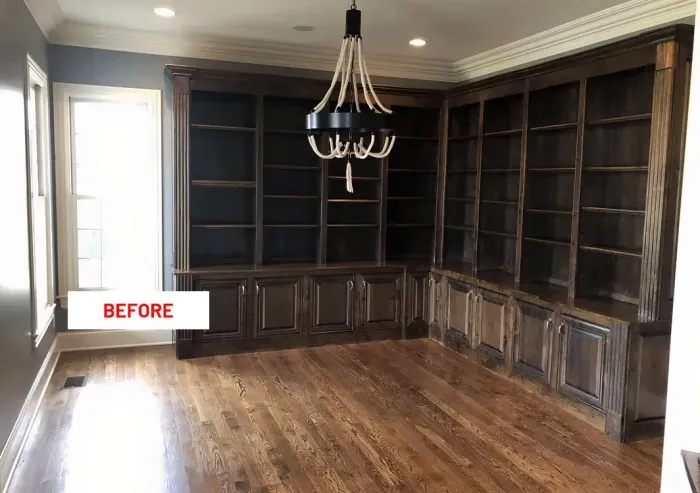
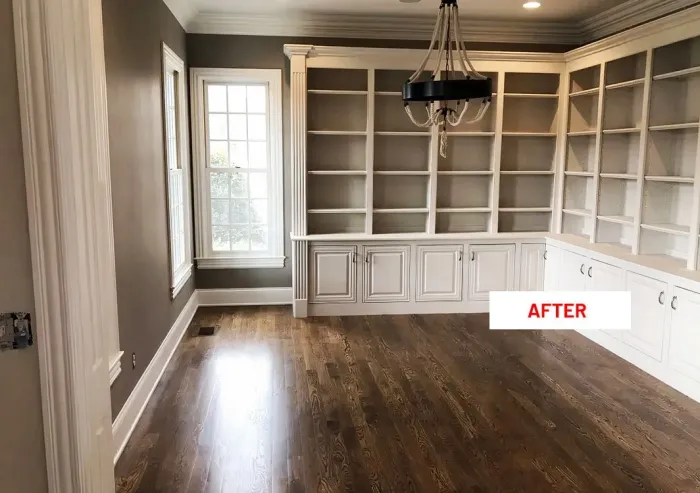
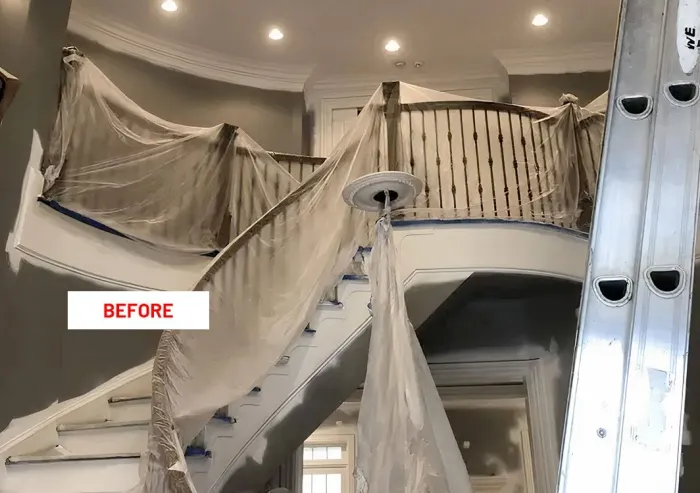
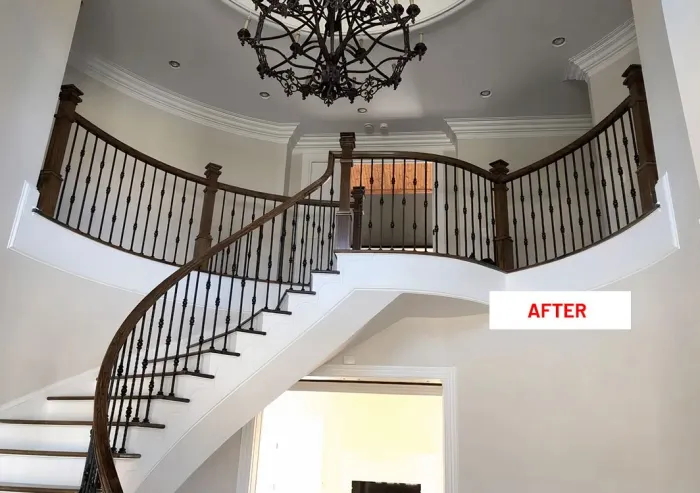
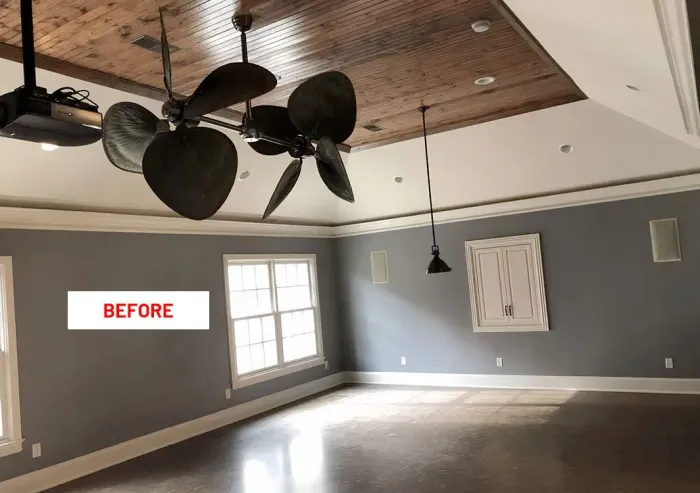
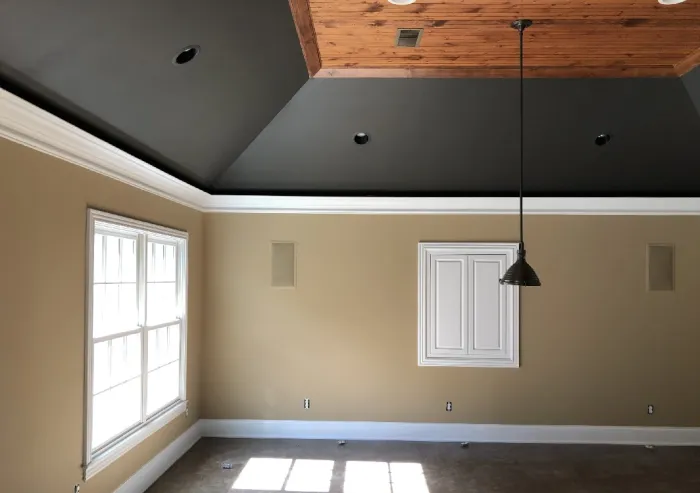
Before and After
Ready to Start Your Project?
Reach out for a free, no-obligation quote. Rick will visit your home, assess the project, and provide a personalized proposal with detailed pricing and scheduling.
$250 off any interior or exterior project over $2,500. Enter code PAINT250 in the form and we will apply it to your quote.
*One discount per project, on new quotes only, minimum project value $2,500. Mention code PAINT250 when you request your quote.